
Nowadays, when we talk about clinical psychology and mental health, names like Sigmund Freud, Ivan Pavlov, and Carl Rogers come up. It is often mistakenly assumed that the field of clinical psychology only developed during the 19th century, when mental disorders were officially recognized as byproducts of certain dysfunctions in the individual’s mind.
Of course, it’s not that people didn’t suffer from psychological disorders before this. In the Western world, particularly in Europe, as well as in pre-Islamic Egypt, it is a historical fact that the mentally ill were subjected to brutal forms of treatment, ranging from skull drilling to caging and confinement for extended periods. However, few people know that while others elsewhere were busy drilling metal into people’s skulls, Islamic physicians had already developed logical, humane, and medical treatments for psychiatric illnesses.
At the time, these physicians did not consider themselves « psychologists » or « psychiatrists, » but their contributions and efforts played a significant role in the development of psychology itself. This article focuses on the contributions of Islamic doctors and physicians to the recognition and treatment of mental illnesses, as well as to the growth of psychology as a field of study.
Debt of clinical psychology to Islamic civilization
The first psychiatric hospitals
Although it was Greek physicians and anatomists who identified psychiatric illnesses as the result of a physiological imbalance, Muslims were the first to build specialized hospitals where patients suffering from psychological disorders could consult a doctor.
Baghdad saw the establishment of its first psychiatric hospital as early as the 8th century, where mental disorders were treated like other physical illnesses (that is, without the involvement of enchantments, magic, and of course, cranial exercises). The treatment of various mental illnesses included the use of several techniques, such as the prescription of medications/concoctions, healing baths, and occupational therapy, etc. – most of which are still used today.
Why is this important? Because the inclusion of a psychiatric ward in a hospital or a « Bimaristan » (as hospitals were known in the Middle East at the time) marked a significant shift in attitudes toward mental illness. The fact that one could approach a hospital, open to people of all classes and religions, for psychiatric problems just like any other physical ailment surely reduced the mysticism and taboo surrounding psychological disorders. As such, Islam contributed greatly to the development of a sensitive and rational understanding of illness, rather than promoting senseless magical remedies.
Theorists and practitioners
Let us examine the role of some of the greatest Muslim scholars in this field.
Ibn Sina
Ibn Sina (980-1037 CE) is among the best-known names for his contribution to the study of the human psyche. He adopted many of the ideas of Greek philosophers, particularly Aristotle, to develop theories and outline treatments for several psychiatric conditions.
He notably acknowledged Aristotle’s concept of the three souls: the vegetative, the sensible, and the rational. He took this typology a step further, stating that in humans, the vegetative and sensible souls (the two souls we share with lower species) connect us to the Earth, while the rational psyche empowers us to understand and connect with the Divine. It is therefore our rational nature that distinguishes us from animals.

Furthermore, Ibn Sina proposed seven inner senses that humans possess. These inner senses—namely, common sense, afterthought, composite animal imagination, composite human imagination, the power of estimation, memory, and processing—enable human beings to think rationally. This theory highlights the genius of Ibn Sina, a pioneer of reasoning theory in the 9th century!
His work also included brain mapping, that is, discovering the different functions for which different parts of the brain are responsible, but he could not go much further in this area because Islam forbade him from performing any kind of dissection. He also recognized the mind-body connection, what we now know as psychosomatic disorders, and perhaps the hypothesis behind the biopsychosocial model. Using his meticulous discoveries, Ibn Sina developed a whole series of treatments for various psychological disorders. His book, al-Qanun fi at-Tibb, or The Canon of Medicine, was used in the medical curriculum of several European universities for over 500 years.
Al Razi
Al-Razi (854-925 CE) was another influential figure in this field. As a physician in the psychiatric department of the world’s first psychiatric institution, he identified and documented a number of psychological conditions and their treatments in his books al-Mansuri and al-Hawi.
He is also known for his use of self-esteem psychology to treat his patients.
Imam Al Ghazali
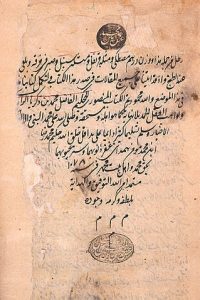
Centuries before Watson’s famous experiment with Little Albert, which demonstrated that fear is a learned response, Imam Al-Ghazali (1058-1111 CE) hypothesized that children learn fear through negative experiences. He also experimented on his own psyche using the method of introspection. Al-Ghazali was also among the first to recognize how needs such as hunger and anger drive a person to behave in specific ways, long before renowned theorists like Maslow and Hull emerged.
Apart from these doctors, even the poets and philosophers of that era were aware of mental disorders. Rumi, in his poem The Guest House, spoke of depression as a mood to be adopted in life.
This human being is a guesthouse.
Every morning, a new arrival.Joy, depression, malice,
a momentary awakening comes
as an unexpected visitor.Welcome and entertain them all!
After all, accepting one’s condition may be the first step in psychotherapy.
Conclusion
The works of these great Muslim scholars and physicians are far more than mere historical literature. At a time when patients suffering from psychological disorders (who needed this additional level of care) were abandoned or subjected to painful torture to drive out the « evil, » the establishment of hospitals and the provision of treatments based on humane principles was undoubtedly a revolutionary step. It goes without saying that Islamic iconoclasm played a significant role in this development—Islam forbade torture or magical spells to exorcise evil spirits and, as such, fostered the development of reasoning and logical treatment for various mental and physical illnesses.
Due to the bias of later historians and other Western scholars, many Muslim contributions to psychology have not received the recognition they deserve . Nevertheless, it is clear that Muslim scholars and Islamic thought played an enormous role in addressing mental problems, psychological disorders, and the growth of psychology itself.
Editor’s Note: Readers should be aware that many scholars have issued rulings against certain aspects of psychology, most categorically referring to the practices of some psychologists who attempt to define human behavior in absolute terms, without regard for the will of Allah. This, of course, bears no resemblance to the practical implementations of clinical psychology by Muslim scholars. Learn more here.
All images: Wikimedia Commons ( The Canon of Medicine | The Book of Medicine )

