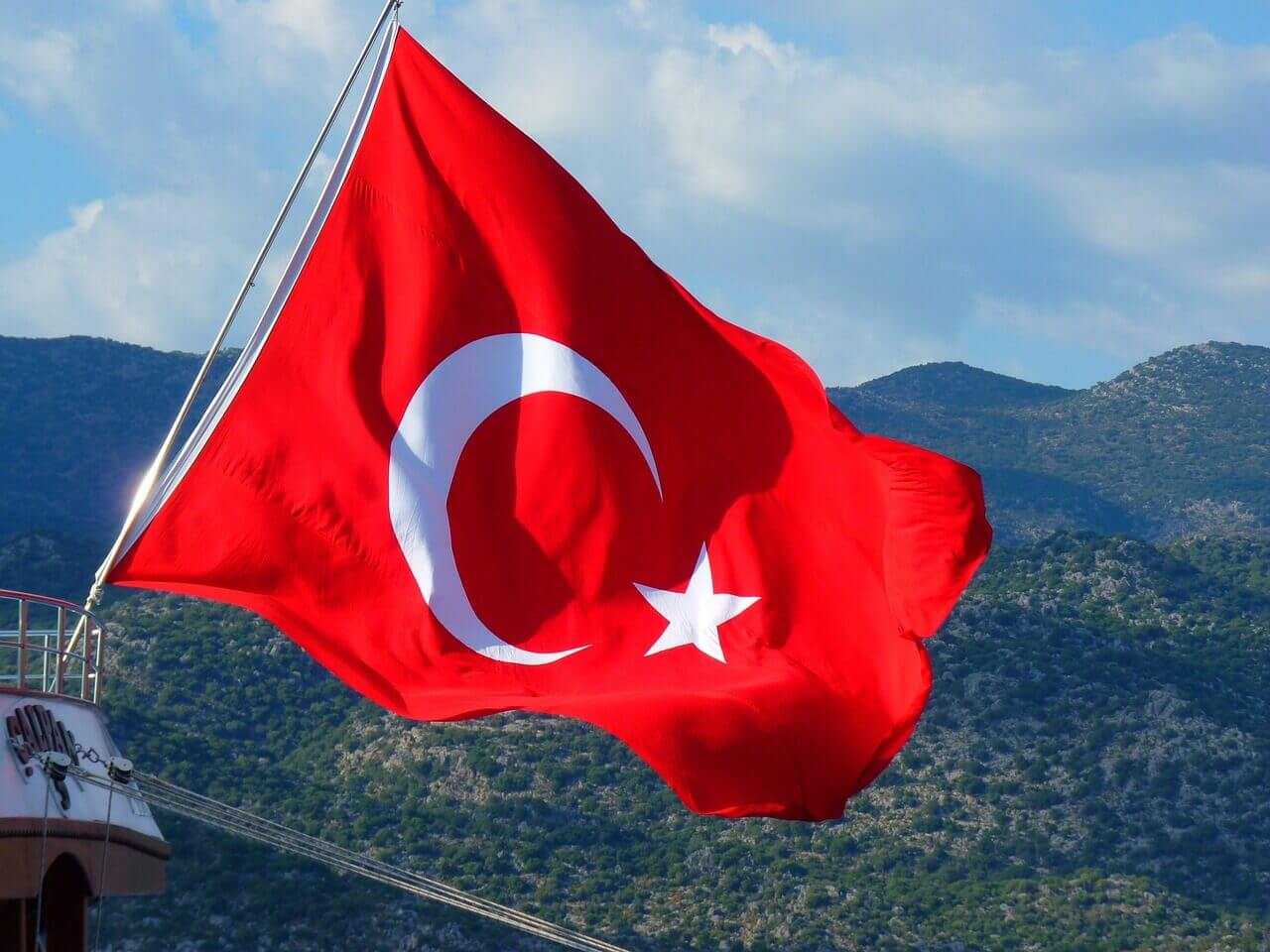
A few days ago, Turkey witnessed a failed coup attempt led by certain factions within the Turkish military. The Turkish coup attempted to overthrow the Erdoğan government and establish a military dictatorship.
Amid the hysteria and chaos, Turks took to the streets to protect their democratically elected government. As a result, the coup failed, and President Recep Tayyip Erdoğan remains in power.
However, even though the attempted coup in Türkiye failed, it left several questions unanswered.
Attempted coup in Türkiye: propaganda beats journalism
The events of the coup in Turkey are now common knowledge. Turkey did not follow Egypt’s path, and in doing so, the Turks taught us all a very important lesson. The military coup did not fail on its own—it failed because the people rose up against it.
Thousands of Turks took to the streets, further moved by the Islamic call to prayer, and protested the coup. Likewise, the police did not yield to the highly trained military personnel.
There were several casualties and numerous arrests following the coup attempt. Conspiracy theories persist, with some even spreading the claim that Erdoğan himself orchestrated the failed coup attempt in Turkey.
Yet, amidst all this, the role of Western media remained dismal and below average. Indeed, journalism was barely visible! It was propaganda.
Western media: journalism or propaganda?
Let’s start with everyone’s favorite, Fox News. The « strategic analyst » simply exclaimed that if the coup succeeds, « we win. »

In fact, Lieutenant Colonel Ralph Peters tried even harder, writing on the Fox News website:
This tragically failed coup was a lost hope, not an attempt to conquer a country. Turkey is not a banana republic in which the military seizes power for its own gain. For nearly a century, the Turkish Armed Forces have been the guardians of the country’s secular constitution.
Not wanting to be outdone, Sputnik took the lead and projected images of the Turkish people protesting against the coup as if they were « celebrating » it!

The New York Times, probably striving to gain additional page views, decided to seize the moment and indulge its dislike for President Erdoğan by reminding everyone of his « controversial rule ».

Furthermore, the Telegraph defined the army as « the guardian of Turkey’s secular constitution » – remember, guardians of the constitution who were trying to overthrow a constitutionally legitimate government!

But it was painful to see The Daily Beast, a publication I myself follow, fall prey to propaganda. According to The Daily Beast, President Erdoğan was denied asylum in Germany (even though he never applied for it in the first place). More facts? Nope!

The above, of course, are just a few examples of how Western media have failed miserably at journalism and excelled at propaganda. Overall, Western media failed to realize that it wasn’t just the police who arrested the rebel soldiers, but also ordinary people who, despite the gunfire, took to the streets in large numbers to protest the coup. Furthermore, they failed to grasp the reality on the ground; the atmosphere in the streets was different. Anyone who even casually skimmed media sources or social networks knew that the mood was in favor of Erdoğan.
However, you can’t really blame the media outlets and publications for their mistake. Many international powers were eager to see the coup in Turkey succeed. They wanted Erdoğan out of power. They desperately hoped the AK Party would fall from grace. Blinded by their bias, it was only natural that they presented rumors and propaganda as « news. »
What more can one expect, anyway? Just like Egypt, in the case of Turkey as well, they wanted a legitimate government outside the power structure and a military regime in place. Those who talk the most about democracy refuse to support democratically elected governments in Algeria, Egypt, Palestine, Turkey, and everywhere else if those governments don’t act like their counterparts. It’s never about rights; it’s not about values. It’s simply a matter of interests.
Conclusion
As for President Erdoğan’s government, there have indeed been some problems. However, times have not been easy for Turkey. One cannot forget that Turkey has absorbed a large number of refugees. Furthermore, it has had its share of friction with Russia and other states, and Erdoğan has handled all of this quite well.
Furthermore, the Turkish people have been unfairly vilified in Europe; Brexit supporters have frightened others by claiming that two million Turks are on their way to the UK.
As such, it was not shocking to see the Turks rallying to support their leader and his government.
In the coming days, further events will unfold. It has been reported (again, in Western media) that some of the rebel soldiers were unaware they were part of a military coup. While the veracity of this information has not yet been confirmed, it is also true that, unlike Sisi’s soldiers in Egypt, the renegade soldiers in Turkey did not open fire en masse on the general public. Unfortunately, there were many casualties. However, for the most part, the rebel soldiers exercised some restraint. Millions would have perished if it had been Bashar al-Assad’s army in Syria.
This incident also demonstrated that traditional methods of military coups are now obsolete. You cannot impose martial law simply by seizing control of state television channels; you must focus on social media, private television, and retail outlets, especially the internet.
Who was responsible for this failed coup attempt in Türkiye? Was it really Fethullah Gülen, or another front? Answers are expected.
Finally, when it comes to thwarting military coups, the Turkish people, who acted fearlessly in the best interest of their country, have taught the world.